Author: nbacts2013

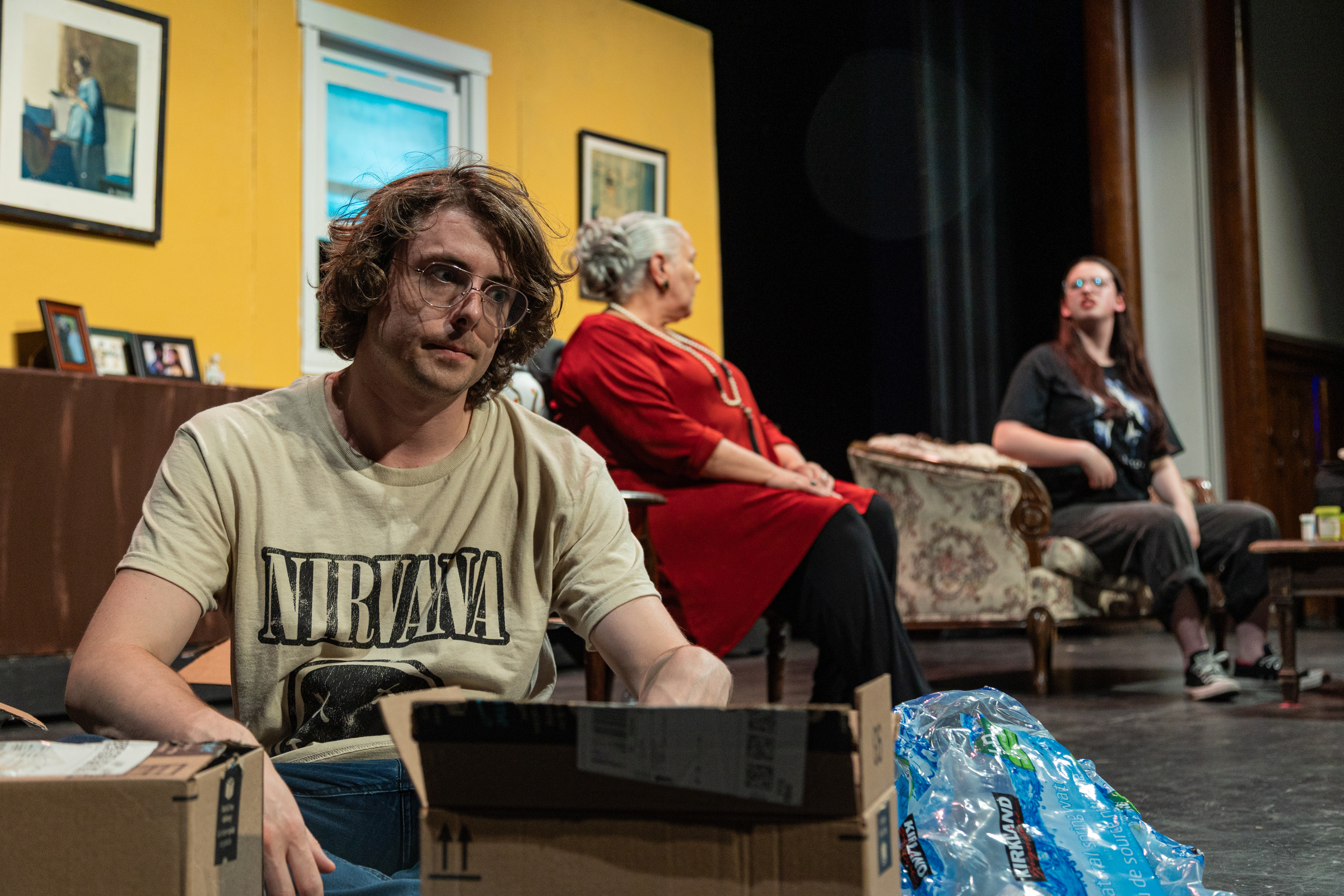
Full Interview With Acting Out Director Naomi McGowan

What’s it been like directing 32 Short Plays About Fredericton? How does it compare to previous plays you’ve directed?

It’s been a fast-paced chaotic adventure. I’ve never had to work with that many settings, costume changes and props in a show and I’ve learned A LOT from working on something so maximalist. I have less experience working on comedies so it’s great to sharpen that skill with such a good crew. It’s a little bit scary working on this genre because you really don’t know what you’ve done until you get an audience. We think this is funny, do they? However, much like the show, the journey is what counts and a little faith in the process got us far.

Is there something in particular about the style or subject matter of the play that especially appeals to you?

When I first read the script it just felt very cozy to me (despite the existentialism), like watching cartoons with a bowl of cereal before school. Fredericton became my long-term home after university because of the sense of community I felt. And this play felt very comforting and focused on the fact that it’s the people who make a place special. I also was drawn to the stress the main character goes through where he is trying to gain control and agency in his own story. That’s something that resonated (resonates?) with being in my 20’s. It’s easy to get focused on producing the outcome rather than enjoying the ride so I like how this play is a reminder of that.

You have the unique experience with NotaBle Acts of having the playwright in the room as a director. But in this case, the playwright, Gill Salmon, is playing a role in her own play. What’s that been like?

Amazing! Gill is really good at switching hats quickly and so not only is she a great actor but she also took the time to answer script questions/adjust lines on the fly. It was really exciting having her in the room and working collaboratively with the team on improvised sections and line adjustments. She also MADE that amazing snake puppet so again, I’m just continuously impressed by her hat switching.

Why should every Frederictonian see this play?

This is borderline investigative journalism probably. To miss this show would mean missing out on the secrets of our city surrounding you on every block. If you want to feel closer to your community and know the name of the ghost haunting you downtown then you better get to Mem. Fast.
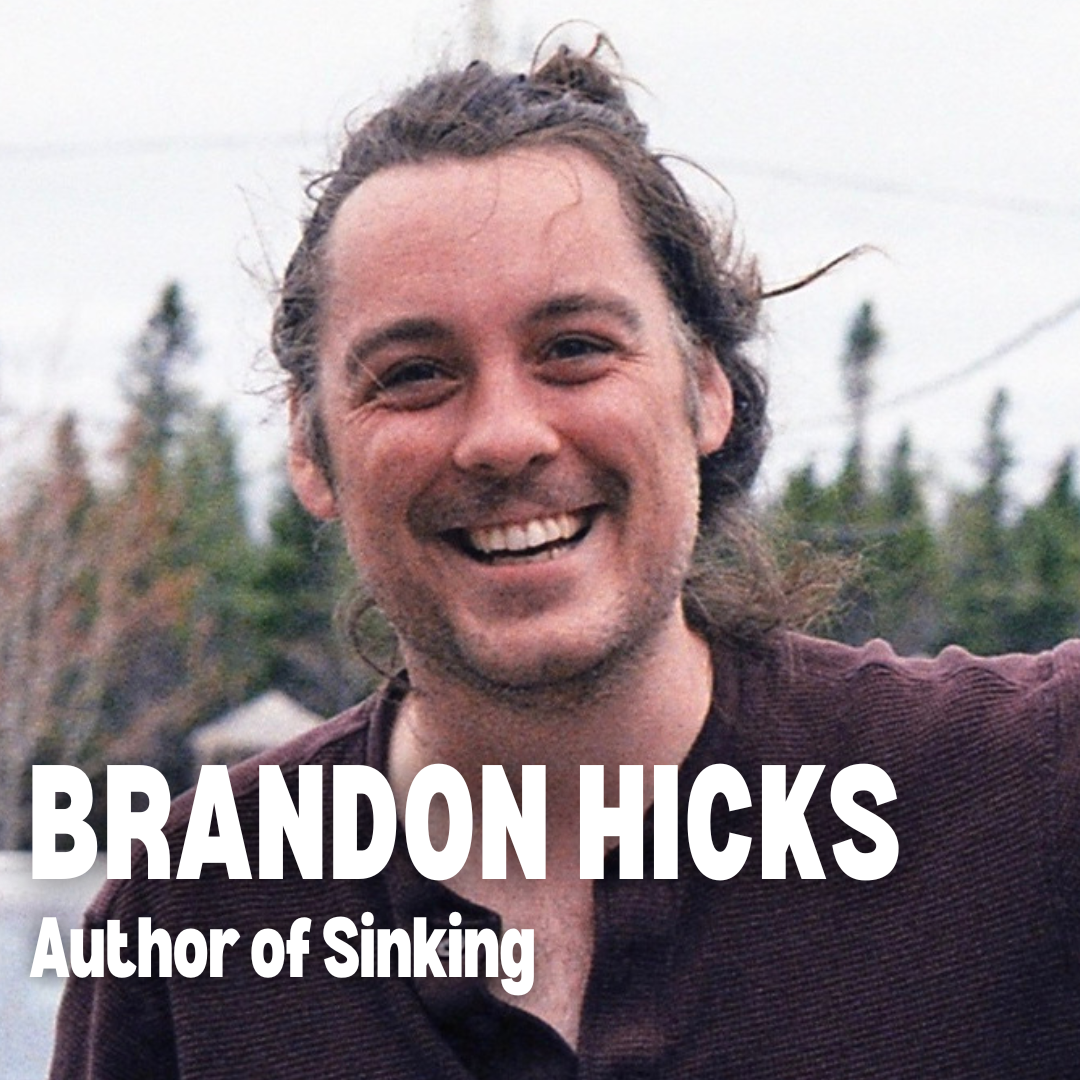
Full Interview With Acting Out Playwright Brandon Hicks

Tell us a bit about Sinking and what led you to write it?

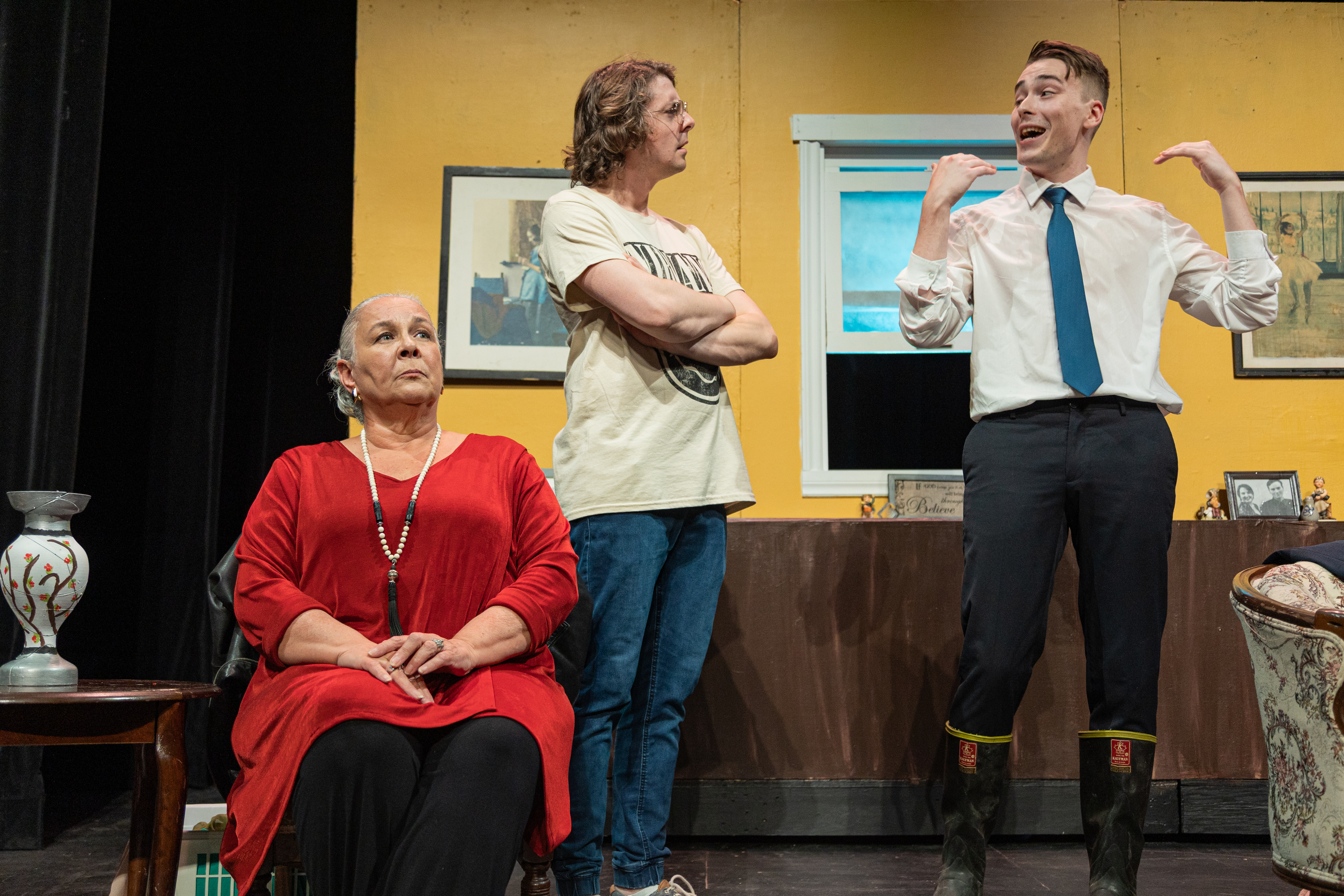
Sinking is about a woman who is reluctant to leave her home, even as it is literally sinking into the bay. Resisting the help of her son and granddaughter, she’s desperate to turn back the clock.

The play was borne out of a desire to write something about the generational divide, and to sink my teeth into something a little longer than I’m used to writing.

Developing these characters, they really came alive for me on the page, and proved to be excellent navigators through the stormy ideological waters I had hoped to explore.

You’re a cartoonist by trade and you’ve had several ten-minute plays in NotaBle Acts before, so this is your first longer work to be staged. What are the most notable differences between writing a ten-minute and a one-act play?

I can only speak personally, but in my experience, a ten-minute play starts with a premise which I then build characters into.

For example, the seed of my short play this year, Don’t Shoot Your Mother!, was that it might be funny to present video game avatars live on stage. Working off of this concept, I started to think about what kind of a story would support the premise, and what characters ought to occupy it.

For Sinking, it was almost the exact opposite. I started with the characters, looking to explore the increasing difficulties of communicating across generational lines. As I wrote, the premise began to shift and change shape as I found ways to express the ideas through metaphors, jokes and concepts as well as dialogue.

In a one-act, the audience is spending more time with these people, so they tend to expect more from them by the end.

Sinking deals with some serious themes by way of a lot of comedy. What is the balancing act you face in doing that, and why the mixture?

Like anyone with a nervous system in 2025, I’m hyper-aware of the myriad of political concerns that plague us these days. I’m confronted with the same ugly headlines and depressing rhetoric that you are.

Especially with the issues that this play is concerned with—namely, the housing crisis and climate change—these can be flattened into simple data and talking points. This is something the internet is especially good at doing. It coddles your feelings, reenforces your values and isolates you.

Conversely, theatre is confrontational. As an audience member, you’re in the room with real people, watching real people disagreeing with each other on stage.

For me, it’s less a play about politics than it is about communication. These are three characters who love each other, and want to connect, but struggle to cross the generational, economic and societal barriers we’ve built against one another.

As for the humour—I just believe it’s the most effective form of communication. When you say something in a funny way, you can be certain it’ll be heard. If you’re lucky, the audience will even make a little noise to confirm it.

As a NotaBle Acts veteran, what do you find most appealing about the festival, and why do you keep coming back?

You folks perform original plays, and I like to write ‘em!

NotaBle Acts is an incredible gift for any aspiring writer. Fredericton has some of the best theatre talent in the country, and the festival rallies all of this expertise behind new, untested material. Where else can someone with no prior experience try their hand at writing a script, then have it performed by world-class actors?

But that’s just as a participant. As a fan, it’s always a joy to hear New Brunswick voices, and to see the incredible work that the directors and stage managers bring to each production.

I believe theatre should be accessible, and I can’t think of any festival that works harder to make it so, on both sides of the stage.

Photo Credits: Kyle Albright