Author: nbacts2013

Last Chance for the One-Acts and Interview with One of Our Playwrights!

TONIGHT, the closing night of the festival, is your last chance to catch the two winners of our Playwriting Competition, a double-bill of the one-acts The Lye Sandwich by Clarissa Hurley and Jobbers by Jeff Lloyd. Both fantastic shows, they start at 8pm at Memorial Hall UNB, and tickets run $15/adult, $12/senior and $10/student. You won’t want to miss these great New Brunswick plays!
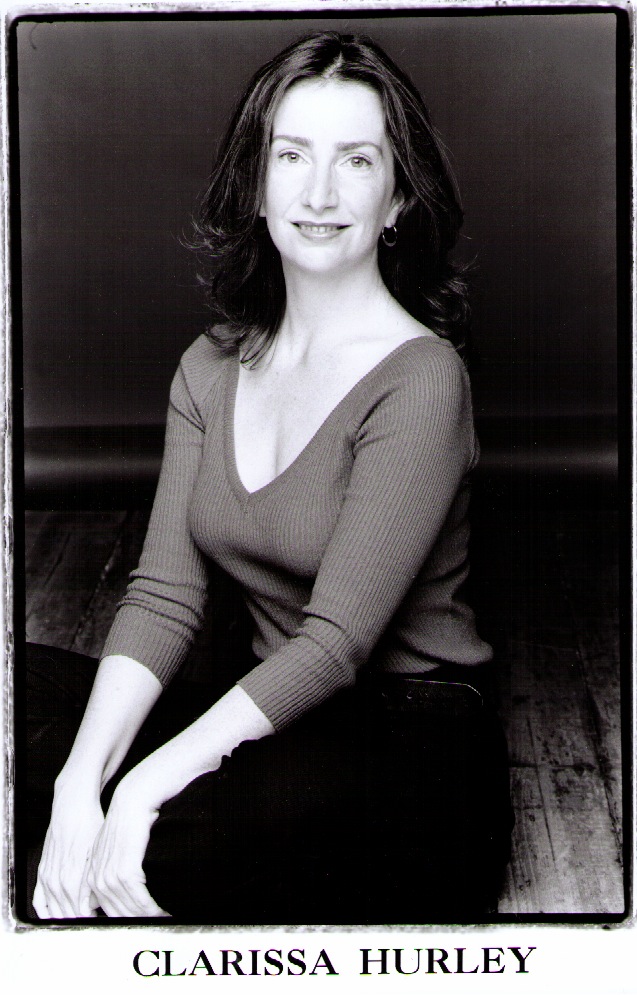
Clarissa Hurley

In honour of closing night, we have a featured interview with one of our playwrights: Clarissa Hurley, the author of The Lye Sandwich. Read on below for her writing motivation, inside info on the show, and more!


Tell us what inspired your play?
An interest in generic adaptation, combined with a sense of negligence.
Further to the first point: I published a short story some years ago in an anthology of Christmas stories, which explores the dyad of Sam and Yves. Upon revisiting it, I began to expand the story, add characters, complicate the plot, and realized I was writing almost entirely in dialogue. This was when it occurred to me it might be a play.
On the second point, for more than 25 years, I have studied and worked in theatre in just about every capacity except as a playwright or stage manager. The latter is definitely too difficult for me, so I thought I’d try writing a script.

The two plays in Acting Out present a wonderful study in contrasts in terms of style and subject matter, yet there are links between them as well. Both are recognizably set in Fredericton and feature casts of tightly knit characters among whom dramatic tensions erupt. In what sense and to what degree would you consider your play a New Brunswick story?
To some degree, in the sense that these characters are loosely inspired by a world that was familiar to me growing up here in Fredericton. But the play deals with themes or occurrences that have a far broader reach: betrayal in love, loss of loved ones, the guilt experienced by harming a loved one, the burden of inheritance (psychological and material), and the struggle to balance or integrate the lives we want to create for ourselves with the legacy of what has been given to us. With minor adjustments, this play could be set in many different locales.

Tell us what influenced the stylistic choices in your play? And tell us about the dog?
There are many influences at work here, including the early 17th century plays of Falminio Scala, which are studies in intergenerational familial conflict and class warfare. (I’ve downplayed the second part of that for the purpose of shortening the play to one act.)  A typical Scala scenario depicts two widowed fathers, in conflict with their children over romantic interests, with the help and hindrance of their servant-friends. TLS is a pared-down version of that structure, but it still affords endless plot possibilities when you throw betrayal, murder, incest, etc…, into the mix. Perhaps less known is that Scala’s plays also contain themes of incest (usually averted) and characters who are culturally “other.”
I’ve also referenced Coleridge’s fascinating fragment, “Christabel,” mostly to evoke a slightly oneiric, gothic mood, which resonates with the idea here of secrets, things hidden, sometimes not so well hidden.
Re. Gerry and Najua: When I was 11 years old, my mother became briefly notorious among the ladies who lunch for taking me to see TNB’s production of Peter Shaeffer’s Equus. People admonished her for allowing me to see naked actors in a stylized sex scene. I, of course, was indifferent to the nudity, but captivated by the stunning portrayal of the horses, played by four buff young men, minimally masked, in tight black jeans and 8-inch drag heels. Since then, I have been interested in how the human body might represent the animal. Allie Ingalls has done wonderful work in this very challenging role. I only wish I could see her develop it further.
There is also a spectre in this play of mannerist art and the figure art historians later labeled “der Sprecher” (“the speaker”), a figure, usually in a crowd scene, who looks directly out at the viewer, often pointing to something in the picture. In TLS (as in many real homes), the dog and the housekeeper are silent witnesses to the violence and abuse that happen inside the beautifully appointed veneer of the house. Although they are silent, we listen to them, follow their stories and see the other characters partly through their eyes. With the name, I have also connected the dog to Chris’s absent mother, Geraldine. Never having known her mother, Chris has had to create Geraldine’s story through the second-hand accounts she has heard, and her own desire to know and understand her.
Finally, the dog is another wink at Coleridge’s poem, in which a mastiff bitch guards the castle by the clock tower. Here I mix things up a bit by conflating her with the mysterious Geraldine who is helped into the house by Christabel. I was drawn to this image of the outsider being brought in by the apparently more innocent party, as it complicates the tendency to ascribe blame or responsibility too readily. Samantha has erred and trespassed, but has also been brought into the situation. There are no uncomplicated roles here.

\you have been involved with the festival in previous years in different capacities. How have your experiences this year compared, and any thoughts on the festival as a whole?
For the second year running, I am swearing not to combine administrative and creative roles. Famous last words, I’m clearly a slow learner. But it’s theatre, it’s messy; you just have to get it done.
I think the festival affords the best opportunity in anglophone New Brunswick for playwrights, aspiring and experienced, to develop their craft. NotaBle Acts provides expert dramaturgical advice and the opportunity to take the play from the script to the three dimensional, visual world of the stage.
Last Night for Site-Specifics and Interview with One of Our Playwrights!

River

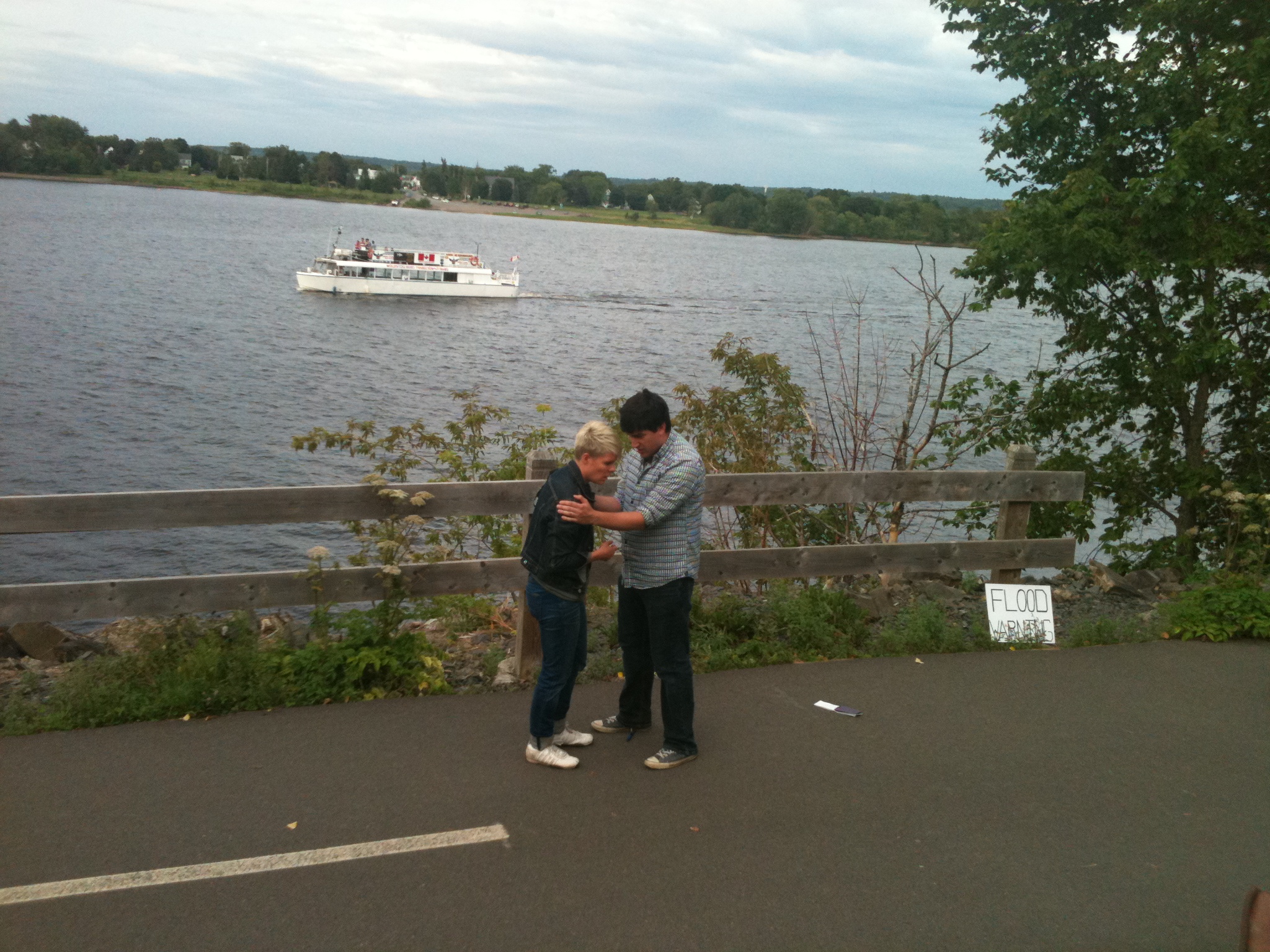
Rebekah Chasse and James Corbett in “John & Libby: River Play”

TONIGHT is the last performance of Street Scenes:Three Site-Specific Plays, so join us at 7:30pm at the Robbie Burns statue (East side of the Beaverbrook Art Gallery) for a great evening of theatre! The plays featured are Linda McNutt’s John & Libby: River Play, Michael Woodside’s Tam O’Shanter and Jake Martin’s The Pugilist. And don’t forget, after the show, to tag along for One Bourbon, One Scotch, and One Beer at the King St Ale House – check out the tab above for details. Our Site-Specific shows have been getting some awesome crowds, and we’re hoping for the best one yet tonight.

In honour of closing night, we have an interview with one of our playwrights: Michael Woodside, who wrote Tam O’Shanter. Check it out below, and see you at the Robbie Burns statue!

Also tonight, 8pm at Memorial Hall, UNB, you can catch our One-Act shows, running until tomorrow, featuring Clarissa Hurley’s The Lye Sandwich and Jeff Lloyd’s Jobbers. Click on the tabs above for all ticket, show and festival details.


Q&A with Michael Woodside, Tam O’Shanter

Tell us a bit about your play and where you got the inspiration for it?

The play initially came from a walk along the green, and a discussion about the restoration of the Robbie Burns statue. At the time, it was a fairly divisive issue about what would be done to raise the $80,000 to restore and flood proof the statue. When the statue was taken down for repairs, I had this sort of absurd nostalgia reaction to his absence. I’m not particularly a Burns enthusiast or have any sort of ancestral roots that tied me to Robbie, but the statue is still an integral part of my particular Fredericton landscape. I started to imagine a situation where a passionate Frederictonian was trying to explain the statue’s importance to a tourist that really wasn’t seeing anything special. This dialogue ended up evolving into the creation of Grant and Tabitha, two IT drones who meet at a tech conference in the city. The play opens with Grant’s lukewarm efforts to impress Tabitha by staging an impromptu poetry reading at the Burns statue, complete with a Gatorade bottle full of whisky. The final puzzle piece was incorporating Burns’ verse into the play, combining Fredericton lore with elements of his poetry. Burns’ poem ‘Tam O’Shanter’ was a natural fit to frame the play, and serves as the inspiration for a sort of decidedly New Brunswick reimagining.

You have had plays produced before at the NotaBle Acts Festival, but this is the first time in the site-specific category. What drew you to want to write a site-specific work, and do you find the writing process in any way different/unique/more challenging than that for a conventional script?

The idea of NotaBle Acts producing site-specific theatre has interested me since its inception into the festival. The accessibility and size of downtown Fredericton makes for an ideal spot to showcase theatre at unorthodox locations. In the past, we’ve seen the festival feature a diverse variety of site-specific shows:  a city bus, the Picaroons Brewtique, even a stroll to the banks of the Saint John river. Having these overlooked or mundane settings featured as the backdrop gives the audience a chance to see old locations in a new light. These shows do provide certain challenges from a writing and production standpoint that need to be solved creatively. Actors certainly do not have the luxury of a controlled space, and instead find themselves trying to compete with backed up traffic trying to get on the Westmorland. We are at the mercy of the Kanye from a car stereo, or the belligerent uncle trying to switch his cellphone carrier. There is a general unpredictability of performing in public, which can be a bit of a high wire act at times. The ambiance of the public space becomes part of the show itself, and manages to challenge the traditional notion of what theatre is.

What do you hope the audience experiences or takes away from your play?

I hope that these shows let the audience see that theatre can be much more than seeing Our Town in your middle school gym. I would love to see more participation in the festival, and to see more amateurs give it a shot. You can still have theatre with limited resources, there are no pre-requisites for this stuff. The writing process can often seem like you are in a heated argument with yourself for days on end, wondering if something is funny or clever enough to put out there. This play errs more on the side of ‘romp’ than existential-guilt-period-piece. I had fun with the writing, and didn’t take myself or the characters too seriously. I hope the audience feels the same.

You’re multi-tasking in the festival this year, acting in addition to writing, and this kind of multi-tasking is pretty common around the festival. What’s that like? How is the festival unique in this regard and how has it helped you learn or grow as theatre makers?

Absolutely, this is what sort of makes NotaBle Acts feel like less like just another festival, and more family reunion. I’m lucky enough to have worked with Linda McNutt, as she directed a one-act I did in 2012. I’ve worked with Jake Martin on stage previously, and now get to see his directorial wizardry applied to my writing. It’s very exciting to see these insanely talented people in a different role, which has sort of become the norm for the festival. You really get to see people thrive by applying what they have learned from being actors, directors, writers, and then bringing all this knowledge to whatever project they’re attached to. The more you can experience, the more you get a better understanding when it comes to honing your preferred craft. There is a lot of passion and commitment for those involved in NotaBle Acts, and it only seems natural to multi-task wherever someone needs you.